2026 Federal Solar Tax Credit & State Incentives Directory
Maximize your savings with the 30% Residential Clean Energy Credit. Explore updated state-by-state rebates, solar battery tax credits, and local utility subsidies for 2026.
Explore State Solar Incentives
How the 30% Residential Clean Energy Credit Works in 2026
The Federal Investment Tax Credit (ITC), officially known as the Residential Clean Energy Credit under Section 25D, remains at a full 30% for the entire year of 2026. This federal solar tax credit allows homeowners and commercial entities to deduct 30% of their total solar installation costs directly from their federal income taxes.
What does the IRS Residential Clean Energy Credit cover in 2026?
-
Solar PV Panels: Standalone or grid-tied solar system components.
-
Solar Battery Storage: Systems with a capacity of 3 kilowatt-hours (kWh) or greater qualify for the full 30% tax credit, even if installed without panels.
-
Inverters & Mounting Equipment: Core structural physics and electrical gear.
-
Sales Tax & Labor Costs: Vetted onsite preparation, assembly, and original installation setup.
Federal Solar Tax Credit Expiration Status: Good news! The 30% federal solar investment tax credit is officially extended and locked through 2032, meaning the program is not going away anytime soon.
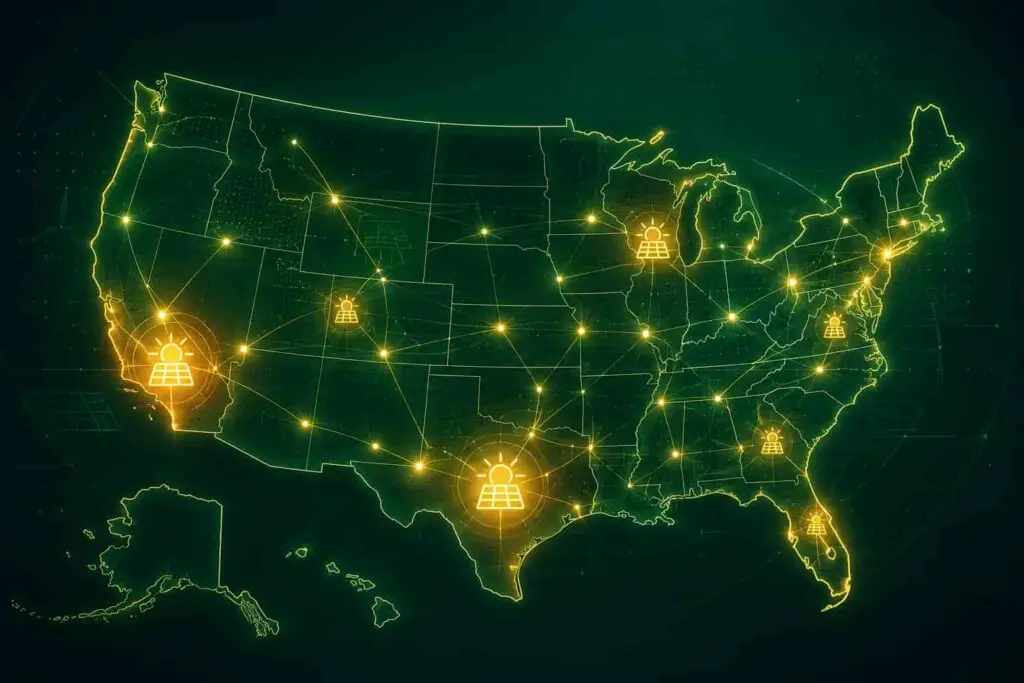
Find Solar Rebates & Tax Credits By State
Local solar incentives vary drastically depending on your geographic location and local utility providers. Select your state below to unlock exclusive net metering rules, local property tax exemptions, and cash-back solar rebates.
Select Your State to View
Local Solar Rebates
Verified 2026 incentive data — federal tax credits, utility rebates,
and state programs explained in plain language.
California
Solar Incentives & NEM 3.0 Guide (2026) — how the new export-rate structure affects your payback period.
View CA incentives
🌿
CT
Connecticut
Commercial & Residential Solar Rebates — PURA-approved incentives and the Residential Solar Investment Program.
View CT incentives
⚡
MI
Michigan
Solar Tax Credits & Utility Incentives — Consumers Energy and DTE offers alongside the new MI solar statute.
View MI incentives
🌵
TX
Texas
Net Metering & Local Solar Subsidies — municipal utility credits, property tax exemptions, and Austin Energy rebates.
View TX incentives
📋
IL
Illinois
Adjustable Block Program & Solar Credits — Illinois Shines REC prices, waitlists, and how to apply for 2026 tranches.
View IL incentives
🏙️
NJ
New Jersey
Successor Solar Incentive (SuSI) Program — residential SREC-II and ADI rates, broker registration, and payment timelines.
View NJ incentives
🌴
FL
Florida
Solar Property Tax Exemptions — 80% assessed-value reduction, sales tax exemption on equipment, and FPL SolarTogether credits.
View FL incentives
Everything You Need to Know About Solar Subsidies
-
Verified 2026 Tax Data: All insights are fully synchronized with the latest IRS Section 25D regulations for the Residential Clean Energy Credit and current state utility policies to ensure maximum accuracy.
-
100% Independent & Unbiased Advice: We provide completely objective guidance and structured data on clean energy programs. We do not sell solar equipment, install panels, or share your data with aggressive sales companies.
-
Federal & State Incentive Stacking: Discover how to legally combine the Federal Investment Tax Credit (ITC) with local utility rebates, net metering programs, and state property tax exemptions to dramatically boost your solar ROI and shorten your payback period.
-
Solar Battery Tax Credit Included: Get comprehensive coverage on how modern standalone backup systems, smart storage solutions, and whole-house batteries with a capacity of 3 kWh or greater qualify for the full 30% deduction.
-
Plain-Language Policy Breakdowns: Skip the confusing legal jargon. We translate complex federal statutes, utility tier structures, and renewable energy certificates (RECs) into clear, actionable steps for homeowners
How exactly does the 30% Residential Clean Energy Credit work under Section 25D?
The federal solar tax credit allows you to deduct 30% of the total cost of installing a qualified solar energy system directly from your federal income taxes. This applies to the solar panels, labor costs for onsite preparation, assembly, inverters, and mounting equipment. It is a dollar-for-dollar reduction in your tax liability, not a mere tax deduction.
Does the 2026 federal solar tax credit cover standalone battery storage?
Yes, absolutely. Under current IRS guidelines for 2026, standalone energy storage properties and smart backup batteries with a capacity of 3 kilowatt-hours (kWh) or greater qualify for the full 30% tax credit. You can claim this credit even if you do not install any solar panels along with the battery.
Can I legally stack state utility rebates with the federal investment tax credit (ITC)?
In most cases, yes! Homeowners can combine federal tax credits with local utility subsidies, net metering incentives, and state property tax exemptions to maximize their solar ROI. However, if a utility company gives you an upfront rebate, that amount is usually deducted from your gross system cost before calculating your 30% federal tax credit.
What happens if my solar tax credit exceeds my federal tax liability?
The solar tax credit is non-refundable, meaning the IRS will not send you a refund check for the excess amount. However, it features a carry-forward provision. Any unused portion of your tax credit rolls over automatically to the next tax year, allowing you to offset future federal income tax liabilities.
When does the 30% federal solar tax credit expire or decrease?
The 30% Residential Clean Energy Credit is officially extended and locked in at the full 30% rate through 2032. After that, it is scheduled to step down to 26% in 2033, 22% in 2034, and will officially expire for residential installations in 2035 unless renewed by Congress.
The federal solar tax credit allows you to deduct 30% of the total cost of installing a qualified solar energy system directly from your federal income taxes. This applies to the solar panels, labor costs for onsite preparation, assembly, inverters, and mounting equipment. It is a dollar-for-dollar reduction in your tax liability, not a mere tax deduction.
Yes, absolutely. Under current IRS guidelines for 2026, standalone energy storage properties and smart backup batteries with a capacity of 3 kilowatt-hours (kWh) or greater qualify for the full 30% tax credit. You can claim this credit even if you do not install any solar panels along with the battery.
In most cases, yes! Homeowners can combine federal tax credits with local utility subsidies, net metering incentives, and state property tax exemptions to maximize their solar ROI. However, if a utility company gives you an upfront rebate, that amount is usually deducted from your gross system cost before calculating your 30% federal tax credit.
The solar tax credit is non-refundable, meaning the IRS will not send you a refund check for the excess amount. However, it features a carry-forward provision. Any unused portion of your tax credit rolls over automatically to the next tax year, allowing you to offset future federal income tax liabilities.
The 30% Residential Clean Energy Credit is officially extended and locked in at the full 30% rate through 2032. After that, it is scheduled to step down to 26% in 2033, 22% in 2034, and will officially expire for residential installations in 2035 unless renewed by Congress.